Archives
- 2026-10
- 2026-09
- 2026-08
- 2026-07
- 2026-06
- 2026-05
- 2026-04
- 2026-03
- 2026-02
- 2026-01
- 2025-12
- 2025-11
- 2025-10
- 2025-09
- 2025-03
- 2025-02
- 2025-01
- 2024-12
- 2024-11
- 2024-10
- 2024-09
- 2024-08
- 2024-07
- 2024-06
- 2024-05
- 2024-04
- 2024-03
- 2024-02
- 2024-01
- 2023-12
- 2023-11
- 2023-10
- 2023-09
- 2023-08
- 2023-07
- 2023-06
- 2023-05
- 2023-04
- 2023-03
- 2023-02
- 2023-01
- 2022-12
- 2022-11
- 2022-10
- 2022-09
- 2022-08
- 2022-07
- 2022-06
- 2022-05
- 2022-04
- 2022-03
- 2022-02
- 2022-01
-
It has been well established that shortly after
2024-11-01
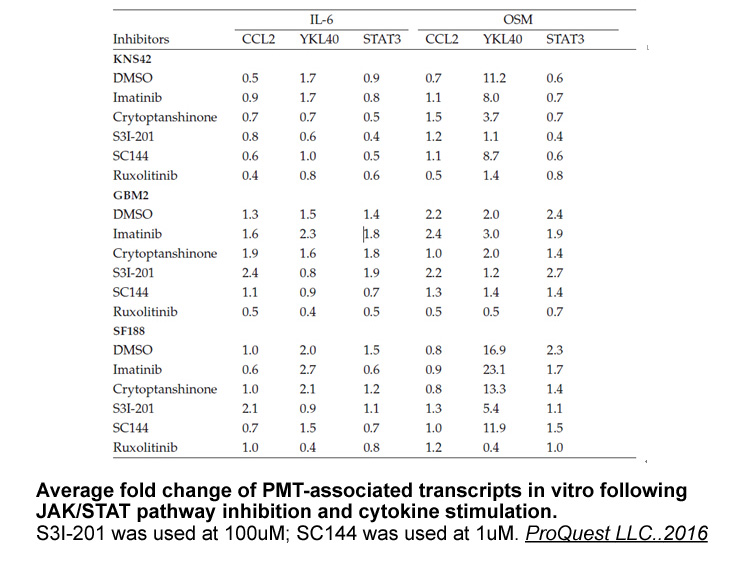
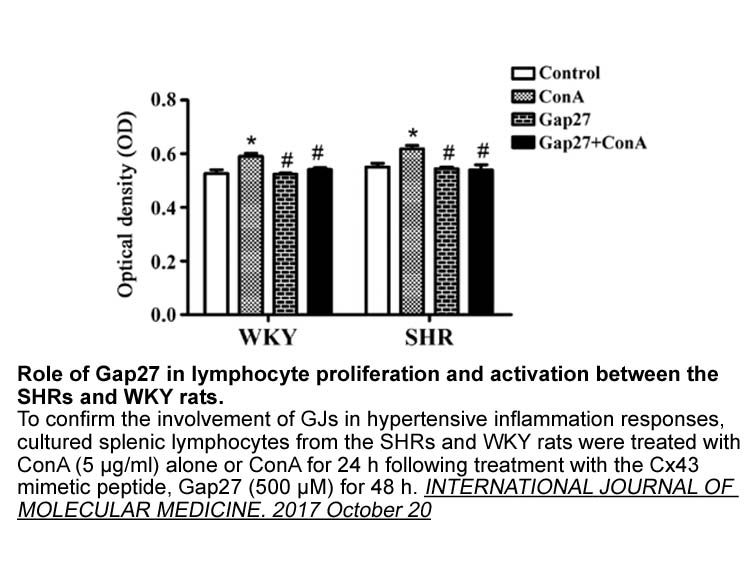
It has been well established that shortly after systemic inflammation, NADPH oxidase and iNOS activity were increased in the Docetaxel and lead to overproduction of reactive oxygen species (ROS) and NO [66]. Moreover, previous studies indicated that Ang II induced an increased level of NADPH oxidas
-
br Material and methods br Results
2024-10-31
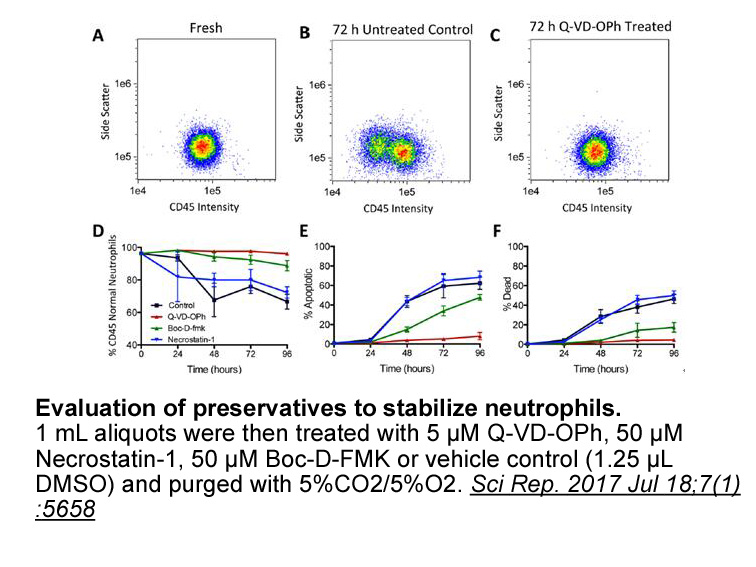
Material and methods Results Table 1 shows that in addition to Leu/CysAP and DPPIV, genes for AspAP, ArgAP, MetAP, APM and PSA are expressed in adipocytes. The kinetic parameters of these AP are also shown in Table 1, revealing that APM has the highest Vmax and catalytic efficiency (Kcat/Km),
-
latanoprost The evidence points toward a role for LO activit
2024-10-31
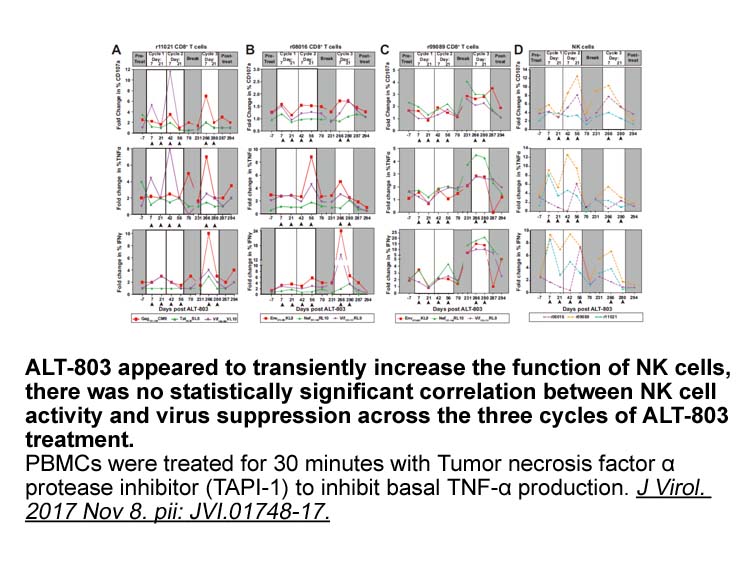
The evidence points toward a role for 12/15-LO activity in WAT in modulating chronic local inflammation and subsequent systemic metabolic decline in the obese state. However, little is known as to the role of 12- and 15-LOs in BAT. Indeed, in addition to WAT, platelet- and leukocyte-type 12-LO are e
-
br Introduction Our ability to see our surrounding relies di
2024-10-31
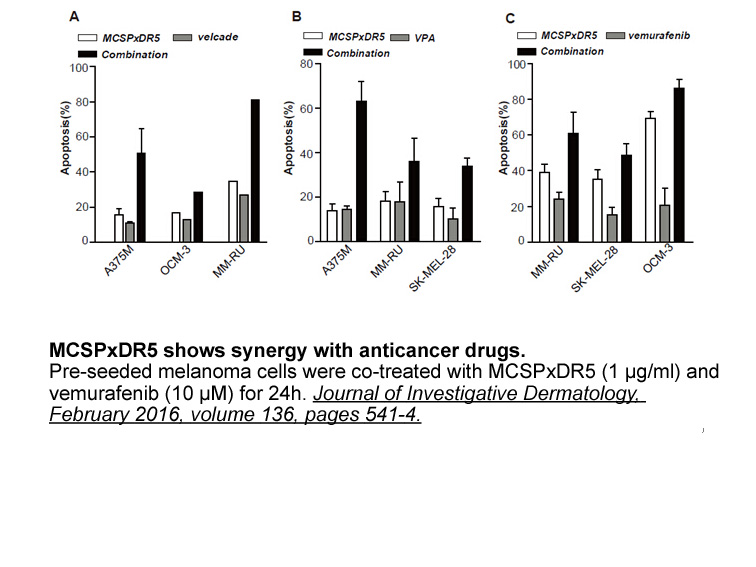
Introduction Our ability to see our surrounding relies directly on the integrity of the anatomical structures composing our eyes. One of these key components is the cornea, consisting of the outer layer of the eye. Its transparency is crucial for light transmission to the retina and allows prope
-
br Experiment br Results and discussion
2024-10-31
Experiment Results and discussion Conclusion Introduction Tuberculosis (TB) is a chronic specific bacterial infection caused by bacteria of the Mycobacterium tuberculosis [1]. TB remains one of the deadliest diseases in the world. It is the second leading infectious cause of death after
-
A correlation analysis was performed
2024-10-31

A correlation analysis was performed to investigate a possible relationship between serum resistin levels and MG-ADL. We observed a significant relationship between serum resistin levels and MG-ADL scores in AChR-GMG-positive cases (r=0.285, p=0.032; Fig. 1C). There were also significant correlation
-
br Funding br Introduction l Dihydroxyphenylalanine l
2024-10-31
Funding Introduction l-3,4-Dihydroxyphenylalanine (l-DOPA) is the gold-standard treatment for the motor symptoms of Parkinson's disease (PD); however, its chronic use induces severe motor complications that eventually limit its long-term efficacy (Bastide et al., 2015). The most disabling side
-
br Conflict of interest br Acknowledgments br Introduction I
2024-10-31
Conflict of interest Acknowledgments Introduction Inflammation is a protective response of the microcirculation to harmful stimuli. Yet, excessive inflammation is potentially harmful and a characteristic of many chronic diseases [1]. 5-Lipoxygenase (5-LO, EC1.13.11.34) contributes to the in
-
The synthesis and secretion of adrenal
2024-10-31
The synthesis and secretion of adrenal androgens is apparently unique to humans and nonhuman primates, and requires the expression of key mediators such as CYP17 [26]. Endocrine control of CYP17 expression in rhesus monkeys is comparable to that in humans [27]. An analysis of baboon cDNA for CYP17 s
-
Another significant group of reductase inhibitors is the ste
2024-10-31

Another significant group of 5α-reductase inhibitors is the steroidal 3-carboxylic SKF 83566 hydrobromide derivatives (relevant examples in Fig. 5), which were designed to mimic the putative enzyme-bound enolate intermediate. This was achieved by introducing sp2-hybridized centers at C3 and C4 and a
-
br Role of LPA in tumor
2024-10-31
Role of LPA in tumor angiogenesis and skeletal metastasis The angiogenesis switch is essential for tumor expansion and escape of tumor methysergide receptor from the primary site and forming distant metastases. Evidence for the role of LPA2 and LPA3 in the mobility of endothelial cells and the f
-
The functional similarity between GPR
2024-10-30
The functional similarity between GPR25 and APLNR, ie both can be activated by Apelin and Apela and are coupled to Gi-cAMP signaling pathway (Fig. 2, Fig. 3, Fig. 4), strongly suggests that GPR25 signaling may play important physiological and pathological roles in vertebrates more or less similar to
-
br Results br Discussion Although the value
2024-10-30
Results Discussion Although the value of ID specialists in the USA has already been described in the literature, this study suggests that the same holds true for the Japanese healthcare environment [7], [17], [18], [19]. Valerio et al. reported that antifungal use in DDD decreased from 66.4 pe
-
Introduction Plant pathogenic fungi are major
2024-10-30
Introduction Plant pathogenic fungi are major pathogens in agricultural diseases and the cause of large crop losses worldwide. There are many kinds of plant pathogenic fungi, with various modes of action. For example, Botrytis cinerea (B. cinerea) is the disease pathogen in the economically importa
-
Although our sample size is not enough to
2024-10-30

Although our sample size is not enough to conclude that there is no great genetic variation of the AR gene in most New World monkeys, it would be reasonable to state that the microsatellite region in the exon 1 of the androgen receptor gene of New World monkeys (platyrrhine) is relatively shorter th
8676 records 99/579 page Previous Next First page 上5页 96979899100 下5页 Last page